Integrated tools can reduce manual work, improve accuracy, and create a better experience for your team and customers.
Running a business today means juggling more than ever: customers, vendors, inventory, payments, marketing, communication, and daily operations.
When those systems do not work together, small tasks can quickly turn into time-consuming problems. Information gets entered more than once. Updates fall through the cracks. Employees spend time tracking down answers instead of helping customers.
Connected systems help bring those moving pieces together.
Instead of managing every tool separately, your business can create a smoother flow of information between the platforms you already use.
Why Integration Matters
Disconnected tools create extra work.
A customer submits a form, but the information has to be manually entered into another system. An order changes, but inventory does not update. A payment is received, but someone still has to reconcile it elsewhere. A lead comes in after hours and sits untouched until the next business day.
Individually, these tasks may seem small.
Across an entire business, they add up.
Connected systems allow information to move where it needs to go with less manual intervention. That can help your team spend less time repeating tasks and more time serving customers, solving problems, and growing the business.
The Benefits You Can Expect
Save Time Across Your Business - Automating routine processes can reduce repetitive work and unnecessary double entry.
Improve Accuracy - Manual data entry creates opportunities for errors.
Create a Better Customer Experience - Customers rarely think about the systems behind a business.
Gain Better Visibility - It is difficult to make good decisions when important information lives in several different places.
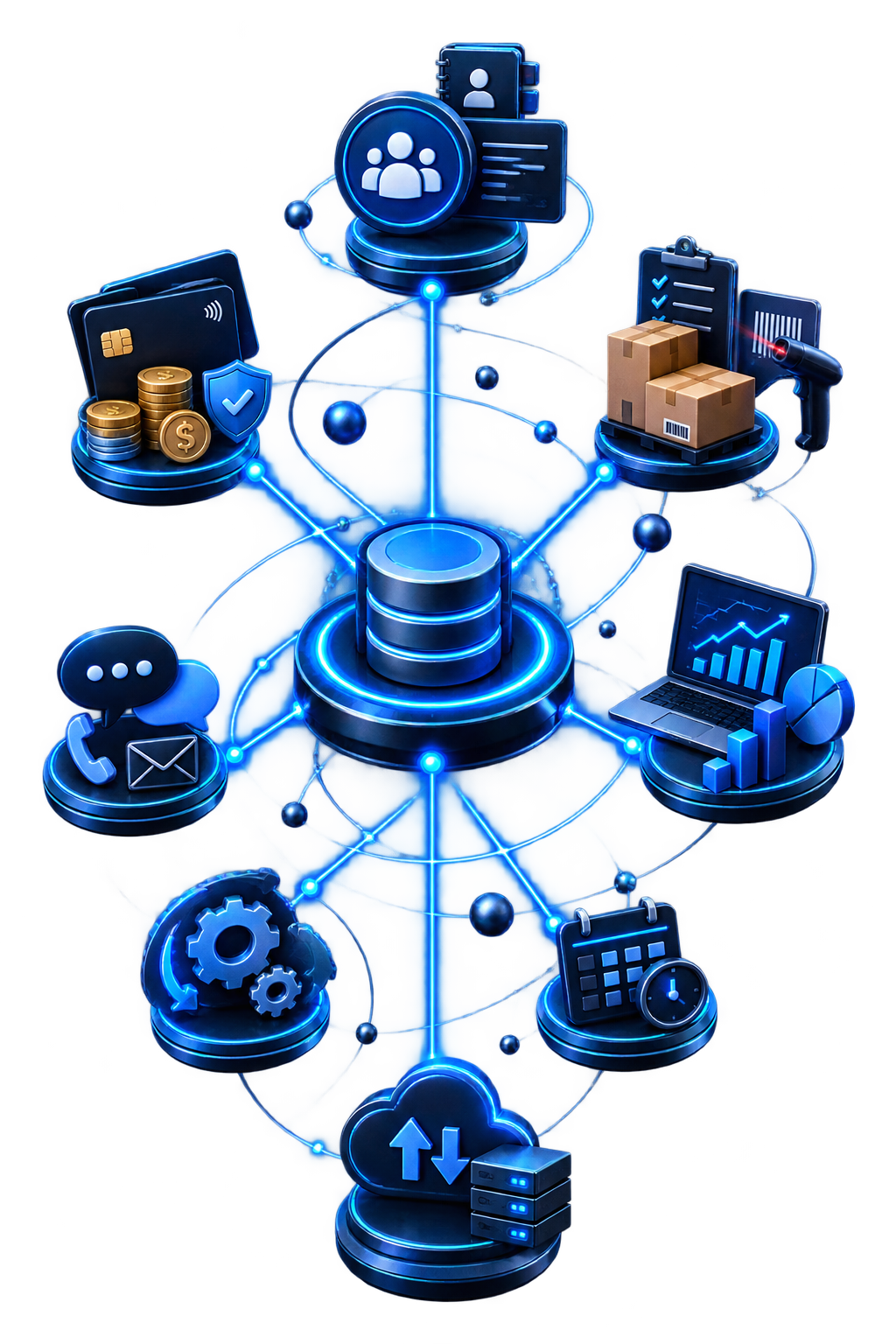
Common Areas to Connect
CRM & Lead Management
Capture leads, track activity, organize follow-up, and help your team respond more consistently.
Inventory & Operations
Keep products, orders, availability, and service information more closely connected.
Payments & Invoicing
Make it easier to accept payments, send invoices, track transactions, and connect with business systems.
Marketing & Communications
Keep customer messaging more consistent across email, text, forms, campaigns, and follow-up tools.
Reporting & Analytics
Bring important business data together so you can understand performance and make better-informed decisions.
Start With the Biggest Friction Point
Connecting your systems does not mean replacing everything at once.
Start by identifying the part of your operation that creates the most unnecessary work.
Where does information have to be entered twice?
Where are customers waiting for someone to respond?
What process regularly causes confusion?
Which task does your team repeat every single day?
Those friction points are often the best place to begin.
Once one process is improved, the next opportunity usually becomes easier to see.
Build Around the Way Your Business Actually Works
The goal is not to add more technology.
It is to make the technology you use more useful.
The right setup should reflect your customers, your team, your workflow, and the way your business operates every day.
When your systems work together, your business can spend less time managing the process and more time moving forward.
READY TO SIMPLIFY YOUR OPERATIONS?
Build a More Connected Business.
Built for Performance can help identify opportunities to connect your website, marketing, payments, customer communication, and operational tools around the way your business actually works.
Simple automation can reduce repetitive work, improve accuracy, speed up routine processes, and give your team more time to focus on customers and growth.